Category Archives: shame

Finding My Voice #metoo

Gaslighting: “A form of manipulation that seeks to sow seeds of doubt in a targeted individual or in members of a targeted group, hoping to make them question their own memory, perception, and sanity. Using persistent denial, misdirection, contradiction, and lying, it attempts to destabilize the target and delegitimize the target’s belief.”

As I begin to write this, I’m surprised to find how full of dread I am. I’ve never before spoken of this topic on a public level. There has been a lot of talk lately on social media about sexual abuse since the #metoo campaign began. My first reaction was to ignore it. I had recovered from my history of sexual abuse. It was done and dusted and all healed over. I wasn’t going to participate in this campaign by coming out as a victim too. I was a victim no more!

However, over the past several years, I was allowing a person in my life to slowly dig into my ancient scars. From the moment he came into our lives, I’ve disliked him. He makes condescending and sexist remarks designed to make you feel small and insignificant. He comments on how sexy you are and how lucky your husband is to have you in his bed, which on the surface looks like a compliment, but leaves you feeling icky and uncomfortable. He grabs your ass in a hello embrace. He grabs you from behind in a “playful” way and just misses your breasts. He talks incessantly about all the women he has sex with. Are we supposed to be impressed? All I feel is sick to my stomach. Suffice it to say, I believed this man to be a predator.

Although I didn’t like being around him, he was a good friend to the family, always there to lend a hand and help out when needed. Everyone else didn’t seem to mind him and thought it was all harmless behaviour from a lonely old man. I was advised to just ignore it. Whenever I talked about his behaviour, it was usually greeted with the eye rolling and deep sighs that said I was being ridiculous and over-reacting. The message was clear… my feelings weren’t valid. This is a lesson women are taught from early on. Our feelings are mostly invalid because they defy logic and rationality. If we can’t articulate our feelings in a way that makes perfect sense and present a case that removes all reasonable doubt, then our feelings simply don’t matter. And because of the systematic training of women to view this kind of behaviour from men as normal, we don’t even see it as abuse. Obviously I was just being over-sensitive. I began to doubt my own mind and overruled my instinct to punch him in the face. After all, he doesn’t mean anything by it. So, I just swallowed my feelings, did my best to be polite and ignored his behaviour like a good little girl.

Throughout my life I have been sexually violated, both subtly and violently. When I was a teenager, I was date-raped twice. I hate that term, date-rape. It’s a sugar-coated expression designed to make the rape seem less ugly. After all, I voluntarily agreed to go out with these men who I found attractive, so I must have wanted it on some level. If you’re on a date and you say no, and they rip your clothes off and rape you, well… you deserved it. Face it, they invested money in you by buying you dinner and drinks and it was the least you could do to repay them for their generosity. So, you don’t call the police. You don’t tell anyone. You just accept it as a really bad date. And later, when I did talk about it to others, I was often told that perhaps I wasn’t clear enough with these men and I should have fought harder. This was actually more brutal than the rapes because this is exactly what I had been telling myself. The ensuing shame was immense and all-consuming and I sought solace through drugs and alcohol. The body eventually heals, but the shame lives on in perpetuity. We live in a culture that still supports the idea that women are to blame for the actions of men who can’t be expected to control themselves, otherwise known as the Provocation Defense.

Recently, and rather unexpectedly, a sudden vitriol came to the surface as the old scars were ripped open. I was drowning in rage. I couldn’t sleep. I would lie in bed all night and cry. I couldn’t breathe at times. I tried, in vain, to talk about it, but couldn’t find my voice. I was yelling but not being heard. I felt all alone. I realised it was time to really talk about the abuse. I had talked about it before to friends and therapists, but I had recounted the stories in much the same way a historian tells them… from a detached and emotionless place. I was just outlining the facts as I recalled them. I had gone through the process of identifying the decisions I had made about myself at the time of the abuse and did my best to rewrite history by changing those old ideas into new and empowered ones. And I felt I had been successful. I had taken control of my life and felt strong and brave and free from my shameful past. But like an onion, another layer was peeled back, which revealed some significant residual pain. I clearly had more work to do. A close friend put it in perspective by asking me, “What would you say if this was happening to me? What would you tell me to do?” I didn’t hesitate! I knew exactly what I would say to her.

It was time to extract this predator from my life. My Dharma teachings, along with my teacher’s voice in my head, were telling me to find patience and compassion in my heart and mind, but also to remember it’s imperative we surround ourselves with fellow seekers of truth and love, not those that promote hatred and division.  Why had I waited so many years before exposing the whole truth? I know why…. because of shame and distrust in my feelings.

So, once again, it’s time for me to slow down and allow my feelings to come up and be experienced fully. I will sit with the discomfort and grieve for all the stolen moments and lost innocence. I will tend to the painful wounds that never fully healed. I vow to never again allow my feelings to go unchecked, unheard, unsupported. I will have more faith in myself and will honour my truth. I will reach out and open up more and not hide my feelings away like something ugly and shameful. I will not protect predators by making excuses for them. I will expose them to the light and banish them.  I will encourage others to come forward and share their stories so they, too, can let go of the shame.  And maybe, just maybe, we can put a stop to this abuse once and for all.

Namaste. 🕉

ARE YOU AN ADDICT TOO?

Definition of Addict (transitive verb):  to devote or surrender (oneself) to something habitually or obsessively.

Does this sound like you or anyone you know?  How about everyone you know? I’ve been clean and sober for over 24 years and throughout my sobriety I’m often asked about addiction. What I mostly hear from people is that they just don’t have an addictive personality so they can’t understand how addicts think or why they just can’t stop doing whatever it is they do that is destroying their lives. 

Now, this comes from people (assuming they’re people I know fairly well) who I watch on a consistent basis obsess about this or that.  I watch them give in to cravings, worry compulsively, constantly look at their phones instead of engaging the person in front of them, desperately cling to old, wrong ideas despite overwhelming evidence to the contrary, or repeatedly read news flashes that appear on their phones, even though it’s invariably negative and upsets them (with the excuse that they should be well informed). They spend enormous amounts of time making excuses, rationalising their behaviour by trying to blame it on someone else, they create drama, gossip, smoke, berate themselves and bite their nails or other fidgety, compulsive habits.  So this is what it looks like to not have an addictive personality?

As a self-confessed addict, let me share some of my addictive tendencies with you….  I repeat arguments in my head over and over and over again until I prove to myself I’m right, which includes negative self talk about my mistakes and failures. I will spend an hour looking for the smallest accounting error even though it doesn’t matter in the least.  Once I get started on lollies and biscuits, there is no stopping me.  In fact, you might lose a hand if it gets in my way.  Then comes the self-loathing when I’m feeling sick to my stomach after. Why did I do this to myself yet again??  I pick my nail cuticles and obsessively write to do lists and even include things I’ve already done so I can feel the satisfaction of ticking them off. I run, even when I’m injured or sick. Sometimes I imagine horrible things happening to my husband and kids and am wracked with all the suffering and fear those dark imaginings bring, even though it didn’t happen.  And I’m only scratching the surface, but I won’t bore you with all my crazy in one blog post.

I’ve spent the better part of my life researching, contemplating and meditating on why I do what I do.  It all comes down to one simple reason. I want to move away from whatever stress, pain or fear I’m feeling in that moment.  Not that I’m always conscious of any particular feelings, as I’m often on auto-pilot and just doing the habitual thing. But if I pause for a moment, after I’ve caught myself in any of the aforementioned habits, I invariably find that I am in a negative mindset. When I’m conscious, mindful and happy none of this behaviour surfaces. Simple as that.  The irony is, in our attempts to move away from our discomfort, our habitual tendencies only enhance it. 

I believe all human beings are addicts. We believe we are different than those “addicts” in the street because our habitual patterns play out differently, but we are all the same… seeking relief from suffering.  That is all addiction is: the desire for something that will help us move away from an uncomfortable feeling, wherein the attainment of that something increases, rather than decreases the discomfort, leading to more craving for something to bring relief.  It’s a vicious cycle. Pema Chodron, the Tibetan Buddhist nun defines addiction as, “Addicted to a firm and fixed view of ourselves (ego) and the world.” Whenever this fixed view is challenged, we cling tighter to our viewpoint, which only leads to more suffering.  And in that suffering, we engage in our addictions, whatever they are.

I’ve found that creating space in my life makes me more aware of my negative patterns, or addictions if you like. This space allows me to do something different than my habitual thing. By choosing a new way of addressing my discomfort, I create new positive habits.  It’s like the saying goes…. “Doing the same thing over and over and expecting different results is the definition of crazy.” 

I create space by being quiet.  I meditate every morning, which helps me develop the habit of stopping the mental chatter and just listening. This is my sacred time to touch base with my mind and cultivate a loving kindness toward myself and others.  I don’t look at my phone first thing in the morning.  In fact, it goes on “do not disturb” every night at 7 pm until 7 am the next morning.  Other people’s emergencies do not have to be my own.  Believe me, if there is a true emergency, somehow I always find out. Setting boundaries is another way I create space.  I don’t allow other people to fill my life with their drama. I take time to nurture myself by exercising, getting regular massages, meditating, doing yoga, eating nutrient dense foods and engaging in activities that fill my soul, like hanging with my family and friends, attending teachings, travelling, writing, reading, running and hiking, to name a few.  When I get too busy for self-care, which I confess is far too often, I’m a big grump!  Surprise, surprise. 

So, go forth and get in touch with your own inner addict and see what he/she has to teach you about yourself and the universe.  

Namaste. 

Practising Wellness


“In dealing with those who are undergoing great suffering, if you feel “burnout” setting in, if you feel demoralized and exhausted, it is best, for the sake of everyone, to withdraw and restore yourself. The point is to have a long-term perspective.” ~ Dalai Lama

Today I woke up with such a sense of urgency for all that I had to get done.  I hit the floor running and almost skipped my morning meditation. I decided I’d just do a short one to save time. I chose a 10 minute guided meditation from my favourite app, Insight Timer. Whether you’re a beginner in meditation or are a long time practitioner like me, this app is the greatest! Anyway, I digress….. 

After spending the entire 10 minutes lost in thought and feeling quite grumpy after, I decided to try again with a much longer meditation. Why the hell am I in such a hurry anyway?? It’s Saturday for crying out loud! Where did this habitual behaviour of putting my To Do List ahead of my mental, spiritual and physical well-being originate?

After an hour of meditation, I finally began to feel the grumpiness and hurried energy melt away and be replaced by a sense of calm and serenity. Perseverance is key. I then decided to do an hour of my favourite yoga practice. Why not transmit this wonderful energy into movement?  What struck me during a particular pose wherein you curl into embryo to rest a moment, was that I rarely rest a moment. I have to be told to do this. Once again, I was reminded that I stink in the self-care department!

Now, I can waste enormous amounts of time on social media sites and watching TV and call it rest, but I’m kidding myself. Not that I believe there is anyway wrong with either of those activites. I love Facebook and Instagram. I love how easy it is to stay in touch with my friends and family overseas. I love chilling out in front of the telly sometimes too. But calling it a wellness practice is rubbish. It doesn’t nourish my soul. It merely strengthens the habit of distraction… the habit of moving away from instead of into self. I have dozens of books on my shelf that I want to read and a dozen books in my head that I want to write, but I get lost in busy-ness and call it work. Working mainly from home brings the added challenge of knowing when to call it a day.  There’s no quitting time and there are always “productive” things I could be doing. Self-care doesn’t seem to rank very high in the “productive” category.

Then comes the crash. This is the part where I’m wracked with exhaustion, which leads to grumpiness, headaches and poor sleep, which leads to more fatigue and overwhelment. I know this is a typical cycle with the modern day working mum and that I’m not alone.  There is a certain pride we take in thinking we are Super Woman “doing and having it all.” And we can do it all, but at a very high price. The price being all the afflictions we suffer today at epidemic proportions…. Cancer, heart disease, weight problems, diabetes, depression, anxiety and mental illness. We’ve been conditioned to believe that self-care in any form is selfish and a sign of weakness.  We should just take a pill and get on with it! Men seemed to have figured this one out pretty well. Most of them don’t seem to be wracked with guilt for going golfing, surfing, fishing, or whatever they like to do to relax and have fun.  Most of them haven’t been raised to believe their job is to take care of others at the expense of themselves. They intuitively understand that without taking time for themselves, they’re not going to be on top of their game or at their best.  We could learn a lot from men, but instead we resent them for our failure to speak up for ourselves and take time for self-nurturing.  It’s not their fault we run ourselves ragged. I’m particularly blessed with a phenomenal partner who always encourages me to take the very best care of myself that I can. He’s my biggest supporter in that because my happiness is very important to him. It also doesn’t hurt that when I’m in my happy place, I tend to be a nicer person to be around. He’s no dummy!

The bottom line here is to remember that self-care, in whatever form, is an act of love, not selfishness. If I am to be of greatest benefit to others, I need to be drawing from a full well. All that busy work will get done in its own time. Besides, I’m far more efficient and effective when I’m rested, happy and nourished. 

So, go forth and nourish yourselves and drop me a line to let me know all the ways you feed your soul. I’m always looking for new wellness tools. 

Namaste. 🙏🏻🌈🕉

BOUNCE – Cultivating Resiliency

resilience

“Don’t Take Anything Personally – Nothing others do is because of you. What others say and do is a projection of their own reality, their own dream. When you are immune to the opinions and actions of others, you won’t be the victim of needless suffering.”  

~ Don Miguel Ruiz, author of ‘The Four Agreements’ ~

When I was a child, and I fell and hurt myself, my mom just put me back on my feet (after ascertaining I wasn’t critically injured), gave me a hug and sent me on my way with the words, “You’ll be alright.”  When I came home from school and cried to my dad about some bully who was mean to me, he taught me how to stand up for myself.  I really believe these early experiences were the seeds that would later blossom into the emotional resiliency I enjoy today.

It seems in this age of social media, we’re exposed to a seemingly infinite stream of harsh words and negativity.  In my day, the bullies were “out there” and my home was a sanctuary.  Now the bullies come into our lives from every angle with no where to hide.

Add to that the idea that we need to protect our kids from any real or perceived discomfort by rushing in to remove every bad feeling the moment they have them.  How are they to develop any kind of resilience to negativity?  We mean well, as parents, and want to prevent our children from feeling pain, but in all this intervention, we’ve robbed them of the opportunity to learn how to move through discomfort, instead of always running away from it or making it someone else’s problem to solve.

The pharmaceutical companies tells us that every negative emotion is a “syndrome” or “disorder” that’s not our fault and easily fixable with a pill.  And as we’ve become a culture of instant gratification, we want instant symptom relief, which these pills promise.  If not pills, we turn to food, narcotics, alcohol, cigarettes, etc. (which are just different variations of the same pill).  Why spend all that time and energy addressing the cause of our discomfort when we can just remove the symptoms and forget about it for a while?

Here’s why… we now have a society of non-resilient and entitled people completely unprepared for a world that isn’t going to shield them from all forms of emotional pain (Political Correctness Police aside); that doesn’t think that every little thing they do is amazing and cause for celebration; that isn’t going to validate their worthiness and solve their self-esteem issues; that isn’t going to reward them just for showing up and doing the bare minimum; and that will hold them accountable for their actions.

Is it any wonder that depression, obesity, disease of all kinds and global anger is sweeping the planet in epidemic proportions?

So, what’s the solution?  It’s simple…. but certainly not easy.  Stop blaming others and decide to take responsibility for your current emotional state and develop resiliency in whatever way resonates with you. The following is a list of all the things I’ve personally done that have helped me enormously:  Seek a counselor, wellness coach or spiritual teacher to help you become more empowered and emotionally stable, which will make you less vulnerable to the negative words and actions of others; go to rehab or a 12 Step programme if you suffer from addictions; train for and run a marathon or half marathon (one of my faves for learning to move through pain and persevere), eat nutrient dense food and exercise (two of the best, and most underused, antidepressants out there), and meditate, meditate, meditate.

If all of these suggestions seem way too overwhelming or hard, just start with taking a single deep breath, then another, and another. Just breathe.

“The journey of a thousand miles begins with one step.”  ~Lao Tzu ~

Namaste.

Liberation through Accountability


“Face your deficiencies and acknowledge them; but do not let them master you. Let them teach you patience, sweetness, insight.” ~Helen Keller~

There is no word for shame or guilt in Tibetan. The closest translation is “intelligent regret that decides to do things differently.”  One of my biggest regrets is wasting so much of my energy on anger, instead of cultivating compassion. It wasn’t until I made the decision to look more closely at my anger, dig in and pull it out by the roots, that I discovered most of it came from feelings of shame.

I never set out to intentionally hurt anyone. I do the best I can with what I have to work with at any given moment in time. As I learn and acquire better tools, I become more adept at expressing myself honestly and productively, causing less collateral damage. When I’m wrong, I accept responsibility and endeavour to right that wrong. Denying my culpability is a complete waste of energy.  I cannot move forward and enact significant change in my life if I’m not accountable for every aspect of my life. I am the sole creator of my life experience.

Whenever conflict arises, it’s not always easy to see what my part is. It takes skill and rigorous honesty to unravel the knot and discover what part is mine. Then comes the real challenge… to not beat myself up about it. It’s this investigative process that leads me to a much deeper understanding of myself and others. This is where compassion is born.  However, if I’m being harsh with myself, that harshness will cloud my interactions with others. In order to gain freedom from anger and shame, I needed to snap out of delusion and fearlessly seek out the truth.

I began with my resentments. They serve as a rich guide, as I tend to resent in others what I most need to acknowledge in myself. When I took a hard look at my anger, my patterns became very clear. I have learned some painful truths behind my behaviours and expectations. I found that I often looked to others to fulfill my need to feel secure in myself…for validation and worthiness.  I allowed the behaviour of others to dictate whether I was happy or miserable.  I was a victim.

Through the following practice in honest accountability, I found liberation from shame and victim consciousness.  I discovered a well of happiness not dependent on outside circumstances… a sustainable happiness I could maintain by working with my mind. Taking people and circumstances out of the equation put me completely in charge of my levels of joy or suffering. The choice was, and is always, mine.

The practice:  Make a list of all your resentments, past and present. Give yourself permission to throw out all rationale and reasonableness and just vent all your feelings about the person or situation. Be as detailed as possible, but don’t worry about how accurate it is. Your perception is what matters in this exercise.

Next, write down how you were specifically affected by the circumstance that led to the resentment? Did it affect how you feel about yourself or what you believe others think and feel about you… your reputation?  Did it prevent you from getting something you wanted or did it cause you to get something you didn’t want?  Did it affect your sense of safety or security? Did it make you feel fearful or worried? Did it affect your finances? Did it affect your personal or professional relationships?

Now, describe any part you played in the event. This is where you need to be rigorously honest with yourself. There’s no point in this exercise if you’re just going to bullshit yourself.  Where were you harsh or judgmental… expecting others to behave the way you think they should?  Were you lacking in humility? Seeking to arouse jealousy? Was the need to be right (protecting your ego) the most important result to you?  Were you dishonest in any way? Be aware that blame is often dishonesty in disguise. Dishonesty includes, not only lies to others, but lies to yourself (denial) and things left unsaid.  Were you inconsiderate…only thinking of yourself?  Were you full of fear? Were you grasping… afraid of losing what you have or not getting what you want?

If you are able to be completely open and honest with yourself, you are likely to see your patterns of thoughts and behaviors underneath your resentments. It is only in identifying the hidden defense mechanisms we use and accepting responsibility for the role we play in all our interactions with others that we can begin to make real changes in our lives that create a new and healthy dynamic in all our relationships. Refusing to play the victim and allowing the behaviour of others to dictate our level of happiness is liberating. We will no longer be held hostage by our feelings, which, by the way, are constantly changing and very rarely based in fact.  As Helen Schucman says in A Course in Miracles, “Your understanding is not a powerful contribution to the truth.”  In other words, feelings aren’t fact. Anger, shame, fear….. all delusions.

So, be brave, seek out your truth and know peace.

Namaste.

3 Things To Stop Saying Sorry For…

lifetips-copy

Saying you’re sorry and meaning it is a powerful tool in taking responsibility for the consequences of your actions. It relieves you of guilt and empowers forgiveness and change.

However, we’re often saying sorry just for speaking our truth. Women, in particular, are prone to this social conditioning.  We’re so afraid of being thought of as a selfish bitch or a nag,  we suppress our truth and do what those around us want or need, often at the expense of our spiritual, mental and physical health.

It’s time to stop being sorry and start taking care of ourselves.  If you believe that makes you selfish, it’s time to look at the definition of the word…

“Selfish:  seeking or concentrating on one’s own advantage, pleasure or well-being without regard for others.”

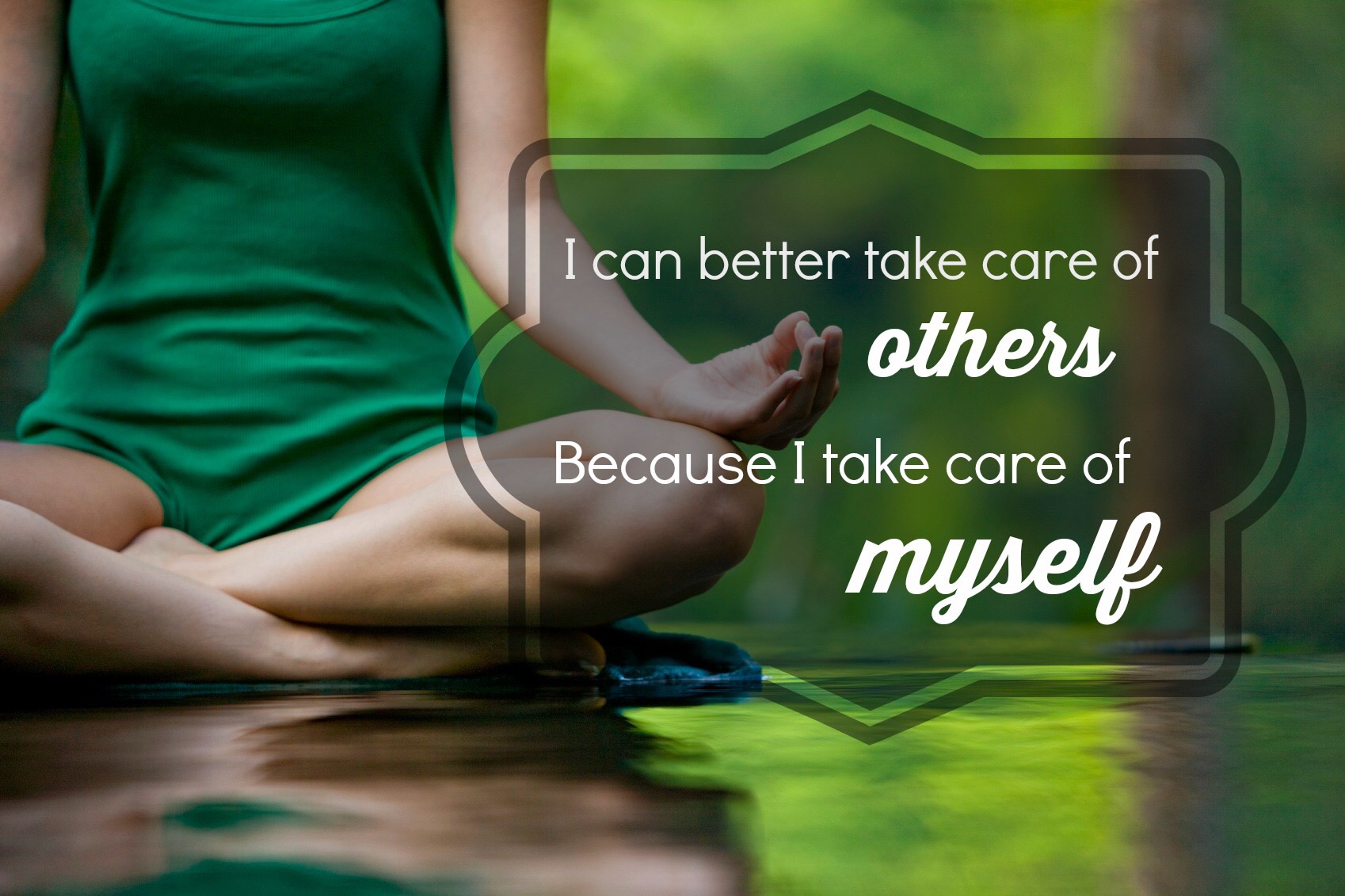
Taking care of yourself and making sure your needs are met is not selfish as long as you are not completely disregarding the needs of others. I’m suggesting you put on your own oxygen mask first before attempting to help others.  Remember, you can’t give what you don’t have.  So, if you’re running on fumes, or worse, collapse altogether, you’re no good to anyone, least of all yourself.  Why not leave the martyrdom to the experts…

Here are 3 things we need to STOP saying sorry for:

  1.  Taking time for yourself – Exercising, resting, reading, meditating, vegging out in front of a movie, hanging out with your friends, date night with your main squeeze, or any activity you enjoy are all perfectly acceptable to engage in without feeling guilty. Whatever feeds your soul and brings joy & bliss to your heart, needs to be included in your list of priorities.  Making yourself a priority will empower those around you to do the same, which benefits everyone;
  2. Saying no  – Whether it’s help in some form, such as giving your money, time, resources, or your expertise in some area, it’s ok to say no. Of course, it’s important to help others when and where you can, but stretching yourself too thin weakens you and throws you out of balance.  I always ask the question, “Will my help empower or disempower them?”  I try to find ways to truly benefit others in such a way as to create independence and boost their confidence. This enables them to build strength and resiliency. The next question I ask is, “What is my motivation?”  Am I coming from a place of love and compassion or am I being self-serving in some way, such as, playing the hero to bolster my ego? Ensuring my motivation is pure is essential in every situation. When my help is peppered with wisdom and love, I find I don’t get out of balance or exhausted. It’s important to remember that sometimes saying no is an act of love.
  3. Asking for help – It’s a sign of strength, not weakness, to ask for help when you’re struggling.  I personally find this one the most difficult.  I am not an island, although sometimes I like to think I am. When you’ve been let down by someone, or many someones, who you counted on to be there, it’s easy to fall into the trap of believing you can only rely on yourself and close off channels of connection. However, this disconnect can often to lead to narcissistic delusion. Together with my intuition, I need to bounce my ideas off trusted friends and family to gain a clearer picture of the truth.   Perspective can only be obtained through a broader view.  When we’re too close, everything becomes blurry.  So, don’t apologise for asking for help.  If you’re concerned about being a burden on someone, remember #2 – it’s their responsibility to tell the truth and say no if they need to.

The Beliefs Challenge

beliefs
“It is only by being supremely blissful that you can give others your absolute best.”
~ Jana Joy ~
I encourage you to look at some of your beliefs and ask yourself the following questions:
Does this belief empower me?
Does it benefit me in any way?
Does it make me happy?
If the answer to any of these questions is, “NO,” you may want to consider letting this belief go and open your mind to a new & improved belief that actually benefits you.
Comment below with a belief you have previously challenged and let go of, or one that you currently hold that creates negativity and restrictions in your life. I’ll start…
There was a time, long ago, that I held the belief that others’ opinions of me defined me. I believed, wholeheartedly, that I was an amalgamation of the ideas that others had formed about me.
Once I challenged this belief and learned the truth about who I really was underneath all the dogma and wrong ideas, I was freed from the prison of shame and self-doubt. I was liberated!! I had discovered that I was pure perfection…that we are ALL pure perfection.
The result of this exercise is that I became highly motivated to challenge all my beliefs, which has led to a life of constant, free-flowing inspiration, growth, empowerment and abundance.
There have been many obstacles along the way…painful emotions, a lot of fear and the pressure of society to try and make me conform to negative beliefs, but I persevered and eventually overcame them all.
I promise you, it was absolutely worth it!
Blessings, Jana

BREATHE.

clouds

“Feelings come and go like clouds in a windy sky. Conscious breathing is my anchor.” ~Thích Nhất Hạnh

Several years ago, when I was a smoker (I know….gross!), I used to believe that smoking relaxed me; never mind the fact that nicotine is a stimulant.  When I gained my freedom from that terrible addiction several years ago, I found that it was the act of conscious breathing that one engages in while smoking that leads the smoker to believe it’s relaxing.

Conscious breathing, as in meditation, right? Yeah.. kinda. But I don’t have to be on the pillow in meditation to consciously breathe.  Once I started to pay attention, I was surprised at how  often I found myself holding my breath or breathing in a shallow manner.  What usually caught my attention to this was that I would suddenly become anxious. I always thought anxiety brought about the shallow breathing but shallow breathing also brings about anxiety.

I once believed that breathing was automated and I didn’t have to think about it.  When I first began meditating many, many years ago, I learned that I didn’t know how to breathe at all and had to be re-taught.  It was hard in the beginning as the more I focussed on my breathing, the more I would hyperventilate.  Man, those early days were rough!

But over time, it became easier to control my breathing and feel the benefits of a regular meditation practice.  I highly recommend beginners join a meditation class or download some good guided meditations as I found it much easier to begin this way.

Now, whenever I feel uneasy, I check that I’m not holding my breath.  One deep, cleansing breath invariably removes, or at least reduces the anxiety.  My breathing tells the tale of my inner world.  It lets me know when I’m off balance, stressed, insecure or not in alignment with Source Energy.  It’s a great barometer that never fails to tell the truth.

So, Number 2 on my list of Divine Daily Practices is:  BREATHE.


SHAME PURVEYORS

ShameFingers

It is an act of love to look after one’s self, not an act of community terrorism.”  ~ Jana Joy ~

Are you a shame purveyor or do you fall victim to them?

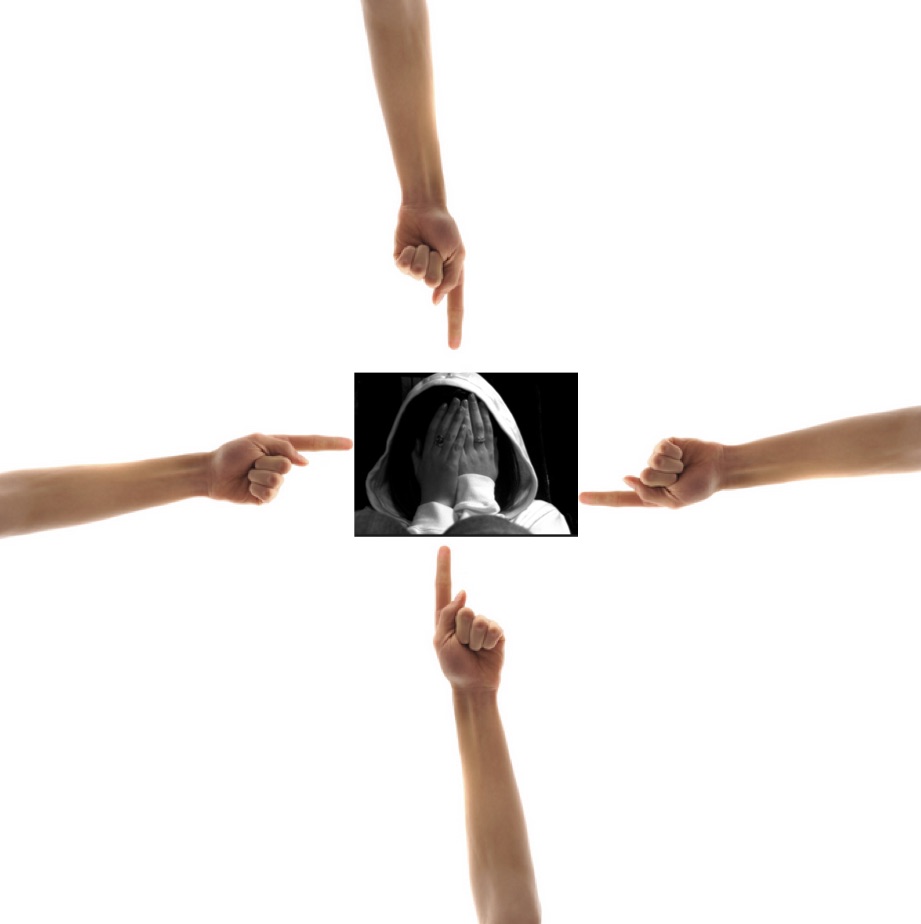
We all know what shame purveyors look like.  We may even occasionally catch a glimpse of one in the mirror.  It’s a person who points a finger and offers a judgmental comment designed to make us feel bad about ourselves.  Sometimes it comes in the form of a pseudo-compliment or phony compassion.  Here are some examples of the shame we’re sold:

“You’re so lucky to have a partner who doesn’t mind if you abandon your children to go off for a weekend away.”

“Oh, I could never do something like that.  I’d feel too guilty.”

“How do you manage to work full-time and still find any quality time for your family??”

“So, what do you DO all day as a stay-at-home mom? Don’t you get bored?”

“I wish I had time to take a nap/get a facial/go to lunch.  I’m too busy taking care of my family/community/work commitments.”

“You should help out more by joining our committee/volunteer for this cause/donate your money and/or time for this and that.”

“You should… You should…  You should…”

The response in my head is always, “You should mind your own business and stop should-ing on me!”  What I actually say is, “No, thank you.”  That’s it.  I don’t make up excuses.  I don’t offer apologies.  I just say no.  I used to be a victim of the shame purveyors and engaged in all the activities I should be doing in order to be a “good” mom and a “good” person.  But I was so busy and tired all the time that I turned into this resentful, crabby cow.  And what did I do with all that resentment?  I turned it on others and should-ed all over them.  I paid it forward.  After all, sharing is caring… right?

Then one day, I learned the valuable lesson we all have to learn the hard way.  In order to really be of benefit to others, I need to take care of myself.  I cannot give what I do not have.  If I’m burned out and exhausted, I’m not much use to anyone.

It is an act of love to look after one’s self, not an act of community terrorism.  But the shame police in my head and the shame purveyors around me would have me believe otherwise.  Taking time for myself to engage in an activity that feeds my soul, but is, otherwise, of no direct benefit to others will cause the collapse of civilization as we know it.  If I’m not there to hold it all together, it will all fall to pieces (can you say, “control freak?”).  As it turns out, the world keeps on spinning, even while I’m getting a facial.

Now that I’ve (mostly) conquered my inner shame purveyor, when I’m faced with one, I’m usually filled with compassion as I know all too well that the shame they’re attempting to push on me is nothing compared to the shame they heap on themselves.  I say “usually” because, I admit, sometimes my initial reaction is to want to smack them!   It takes a lot of practice to get past the habit of shaming myself and others, but, like anything else, the more I practice, the better I get at it.

If we all stopped playing the shame game, we would be free to live our lives purposefully and joyfully.   I encourage you to release your inner shame purveyor and stop the vicious cycle of abuse.  A true gift is one given from love, not out of shame or guilt.

VULNERABILITY

vulnerability

“Vulnerability sounds like truth and feels like courage. Truth and courage aren’t always comfortable, but they’re never weakness.”  ~Brene Brown~

Vulnerability, to me, means telling the truth, even when it gets me in trouble or causes me embarrassment.  It’s saying, “I’m sorry” and asking for forgiveness. It’s saying, “I don’t know” and, “I love you.”  It’s sharing my fears and secret shame with those I love and trust.  It’s admitting I was wrong and that you were right. It’s allowing myself to be really seen, flaws and all.  It’s following my dreams, despite the fear of failure.  It is writing this blog and sharing it with the world. 

Vulnerability feels like having a wide open heart; loving someone so much that they have the power to hurt me deeply, and loving them anyway.  It’s allowing others to care for me when I’m sick or grieving.  It’s sharing the truth when you ask me how I am feeling.

Being dependent is not vulnerability.  Dependency makes me feel weak.  I’m learning that there is a vast difference to being dependent and depending on others.  It takes vulnerability to depend on someone, knowing that they could let me down.  And if they do let me down, it’s knowing that I’ll be just fine, despite feeling hurt.  I think that’s the main difference.  Dependency creates the illusion that I have no power to create the life I want; that if you leave me or disappoint me, my life will come crashing down around me, causing irreparable damage.

Feeling pain is a sign of vulnerability.  Rather than run from it, I allow it to flow freely through me, rejoicing in the knowledge that my heart is open.  A closed heart doesn’t feel pain…it feels angry or numb, both defense mechanisms.  When my heart is really open, my spirit is aligned with Source energy.  This feels so amazing, it’s worth embracing and walking through the pain.

I would love to know what vulnerability means to you.  Please share your answers in the comments section below.

Namaste.